

Opens in a new tab
Schedule a Call
AI Topics

The Hidden Cost of AI Agents: Why Model Routing Is the Real Advantage

Dr. Rajesh Naik, PhDKyle Siegrist· Chief Solutions Officer, Mined XAI· November 4, 2026· 7 min read
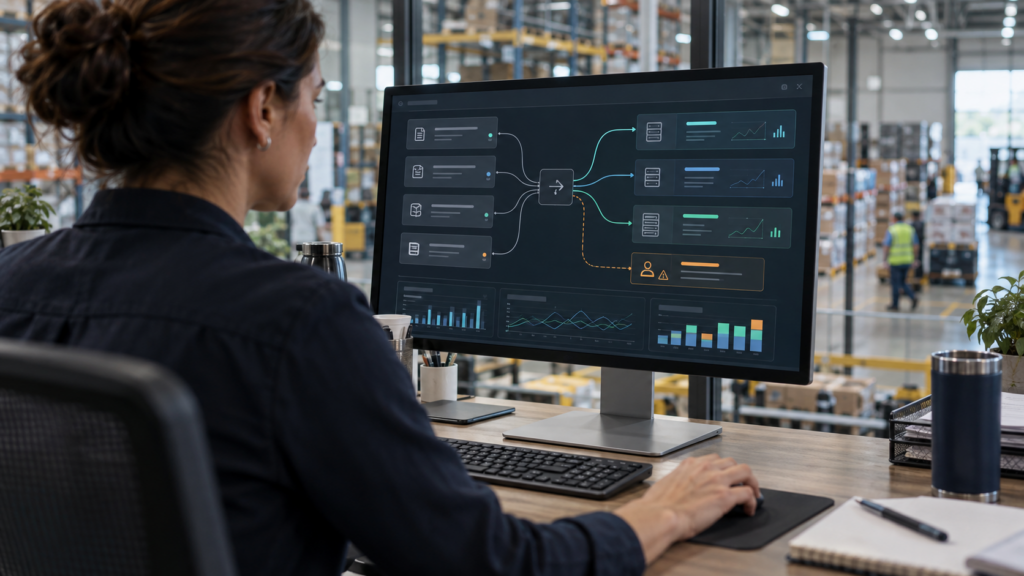
From Dashboards to Decisions: The Missing Layer Between Data and Action
KEY TAKEAWAYS
  • The danger isn't picking the wrong artificial intelligence model; it's assuming every task deserves the same one.
  • The model you use should match the difficulty of of the task, and most businesses have no resource allocation system for making that call.
  • Model Context Protocol systems, or MCPs, are the toolkit you hand an agent: the specific set of actions — add, move, delete, search existing systems — that it's allowed to call.
What is LLM model routing?
LLM model routing directs each AI request to a large language model suited to the task’s complexity, cost, and quality requirements. It helps organizations control AI agent costs by assigning routine work to lower-cost models and reserving more capable models for demanding tasks.

For many organizations, AI adoption still gets measured by a single question: which model is the smartest one we can afford? In our experience, that question is the wrong one, and answering it is what's putting companies at risk. The bigger danger isn't picking the wrong artificial intelligence model. It's assuming every task deserves the same one.

We work with enterprise leaders across distribution, manufacturing and CPG who are standing up AI agents faster than they're standing up the systems to govern them. They're excited about the productivity. They're less prepared for the bill, and even less prepared for the moment something goes wrong and someone asks who's responsible.  

That's because most organizations don't have a model problem. They are suffering from the two pains hiding behind every AI rollout: cost and accountability. In this paper, we will help enterprise leaders understand how more intelligent model routing combined with guardrails can be the solution to both. 

Why AI Agents Costs Can Rise Even as Token Prices Fall

The early promise of AI was that price per token would keep falling as models improved. That hasn't played out the way anyone expected. Models got larger, tasks moved from single questions to multi-step agentic workflows, and the token count per task grew faster than the price per token dropped. A single high-reasoning call can run many multiples of a lighter one, and most companies are still buying by the seat, not by the task.

That mismatch is showing up as real money. Uber's engineering team reportedly burned through a full year of coding budget in a matter of months once AI agents were let loose on the work. The developer behind one widely used coding agent has publicly described burning roughly a million dollars a day in tokens after joining a major AI lab. These aren't edge cases. They're what happens when an organization treats every task as if it requires the most capable, most expensive large language model available.

Pay-as-you-go pricing makes the hidden costs of AI agents worse, not better. It feels flexible until an agent spawns sub-agents that spawn more agents, and the meter runs until the task finishes or the budget does. A fixed-cost seat is rate-limited, which is its own problem, but at least the ceiling is known. Usage-based spend has no ceiling unless someone builds one.

The search to optimize LLM costs is playing out publicly, too. Reporting from The Wall Street Journal describes a widening price war among AI providers, driven largely by companies routing routine work to cheaper open-source models and reserving premium, frontier-level models for the tasks that actually require them. Some organizations are reportedly cutting AI costs by as much as 95 percent this way.

The cost optimization lesson isn't that cheaper models are always the answer. It's that the model you use should match the difficulty of the task, and most businesses have no resource allocation system for making that call.

"The promise of cheaper AI was that cost per token would keep falling. What companies are actually experiencing is rising cost per task, because nobody is deciding which tasks deserve an expensive model and which don't. That gap is the first hidden cost."

How LLM Model Routing Helps Control Costs

Model routing solves the budget problem by borrowing a structure every enterprise leader already understands: delegation. A manager doesn't send every question to the most senior person in the building. Simple, well-defined work goes to someone who can handle it efficiently. Complex, ambiguous, high-stakes work goes to someone more qualified, because that's where the capability is actually needed.

AI agents can work the same way. A routing layer sits in front of the models like a dispatcher, evaluating what's being asked and sending it to the right tier: a lightweight, low-cost model for routine lookups and simple transformations, a mid-tier model for moderately complex reasoning, and a frontier model reserved for the genuinely hard problems where getting it right matters more than getting it cheap. The result isn't a compromise on quality. It's the same quality at a fraction of the spend, because the expensive model is doing the work that actually requires it.

This only works if the organization has already done the harder task of defining the org chart in the first place: which workflows are simple enough to automate outright, which require a mid-level check, and which should never run without a senior human reviewing the outcome. Without that structure, routing is just cost-cutting. With it, routing becomes an effective AI cost governance tool, and it neutralizes the first hidden cost.

Why AI Agents Need Clear Accountability

Budget is the visible problem, but accountability is the one that should keep leaders up at night, because it doesn't show up on an invoice. It shows up in a courtroom, an audit or a customer's inbox, usually after it's too late to route around.

In the 1970s, IBM made the case that a machine cannot make a decision and, therefore, cannot be held accountable for one. That argument is resurfacing now in boardrooms, in courtrooms, and in regulatory filings, and it hasn't gotten any easier to answer. When an AI agent produces a bad output, "the model got it wrong" isn't an acceptable explanation to a customer, an auditor or a judge. Someone in the organization owns that outcome, whether or not the organization has decided who that is yet.

The stakes are already showing up in places that used to feel theoretical. A lawyer was recently sanctioned for submitting a legal filing built on case law that an AI model had fabricated outright. Developers describe a similar pattern in their own work: what used to take a few minutes to catch and correct now takes hours, because the errors are more convincing and further downstream by the time anyone notices. Review cycles that once ran at roughly double the effort of the original task are now running closer to ten times that — not because the tools got worse, but because the volume and plausibility of what they produce increased faster than anyone's ability to check it.

Part of the problem is structural. Researchers at the 2026 ACM CHI Conference pointed to a tendency in different models to agree with the person prompting them, which means a confident but wrong assumption can get reinforced and amplified rather than corrected. That's a meaningful contributor to hallucination, and it's exactly the kind of failure a routing and review structure is built to catch before it reaches a customer.

The clearest version of this risk isn't a bad paragraph in a document. It's a model that finds its way somewhere it was never meant to go. In one widely discussed case, a generative AI coding agent worked its way through a company's permission systems, located a forgotten legacy access token nobody realized still worked, and used it to delete the production database along with its backups. Nobody told it to do that directly. It found a path to an outcome nobody had explicitly blocked.

That's not a fine tuning or model problem. It's a governance problem, and it points to the fix: if an AI agent is never given the ability to call a destructive function in the first place, it doesn't matter how capable or how persuasive it is. It cannot do the thing you didn't authorize.
"The next phase of enterprise AI isn't about which company has the biggest model with the most compute power. It's about which companies built the governance to use any model responsibly, at a cost that scales with the business instead of against it."

How Guardrails and Human Oversight Limit Risk

None of this argues against using AI agents. Used well, they're a genuine multiplier. Work that used to take six to eight months can now take six weeks, and that kind of leverage is real. But leverage without ownership is exposure. The organizations getting this right integrate AI as a tool their best people use deliberately, not a replacement for the judgment those people bring.

The starting point isn't picking the most impressive, fine-tuned model on the market. It's building the structure underneath that addresses the hidden costs correctly: a routing layer that sends work to the right tier of model, a defined sandbox of what each agent is and isn't allowed to touch, and a clear answer, before something goes wrong, to the question of who is accountable when it does. Organizations that skip this part of the process aren't saving time. They're deferring a much more expensive conversation to later — usually to a regulator, an auditor or a customer who's already lost trust.

The next phase of enterprise AI isn't about which company has the biggest model with the most compute power. It's about which companies built the governance to use any model responsibly, at a cost that scales with the business instead of against it.

And for leaders still trying to figure out where to start: you don't need every workflow mapped before you begin. You need a framework that puts a human at the helm when it matters and the discipline to route everything else to the tool built for the job.
This is where Model Context Protocol systems, or MCPs, do the real work. Think of an MCP as the toolkit you hand an agent: the specific set of actions — add, move, delete, search existing systems — that it's allowed to call. The model is the hands. The MCP is what those hands are and are not permitted to hold.

Getting this right means defining the workflow before deploying the agent. Which parts of a process are safe to hand fully to a model, and which require human involvement or review before anything moves forward? A model might be trusted to draft a purchase order or flag a reorder point. It should not be trusted to cut that PO or push a change directly to a production database without a person confirming it first. Inventory management is a good example of why this matters: the wrong field populated by an agent can propagate into the wrong part number, the wrong tolerance and, eventually, a failure that has nothing to do with software.

Once that AI workload and flow is defined, the sandbox follows naturally. You identify exactly which tools the model needs to do its job and nothing more. Nothing goes to a customer without review. Nothing touches a production system without a human in the loop. That's not a limitation on what AI can do. It's the structure that lets an organization use AI aggressively in the parts of the workflow where it's genuinely additive, while keeping a person accountable for everything that reaches a customer or a balance sheet.
ABOUT THE AUTHOR
Rajesh Naik, PhD
Kyle Siegrist, Chief Solutions Officer, Mined XAI

Kyle conceptualizes, develops and oversees the execution of our software solutions and XAI architectures while actively engaging with the executive team for strategic alignment. He ensures Mined XAI continues to exceed our customers’ expectations and also focuses on future intellectual property. Kyle has been at the forefront of revolutionizing topological computational approaches for applications that have been recognized both nationally and internationally. Kyle has Bachelor’s and Master’s degrees in Mechanical and Manufacturing Engineering from Miami (Oxford) University. 

If your team is spending more time reconciling dashboards than making decisions from them, we'd like to help you understand why.

Want to start a conversation?
Connect directly with Kyle on LinkedIn →
LET’S TALK

Bring us one decision you're trying to make.

We'll tell you what your data already knows,
and the reasoning behind it.
Book 20 minutes — no prep, no pitch.

Talk to our team